Executive summary
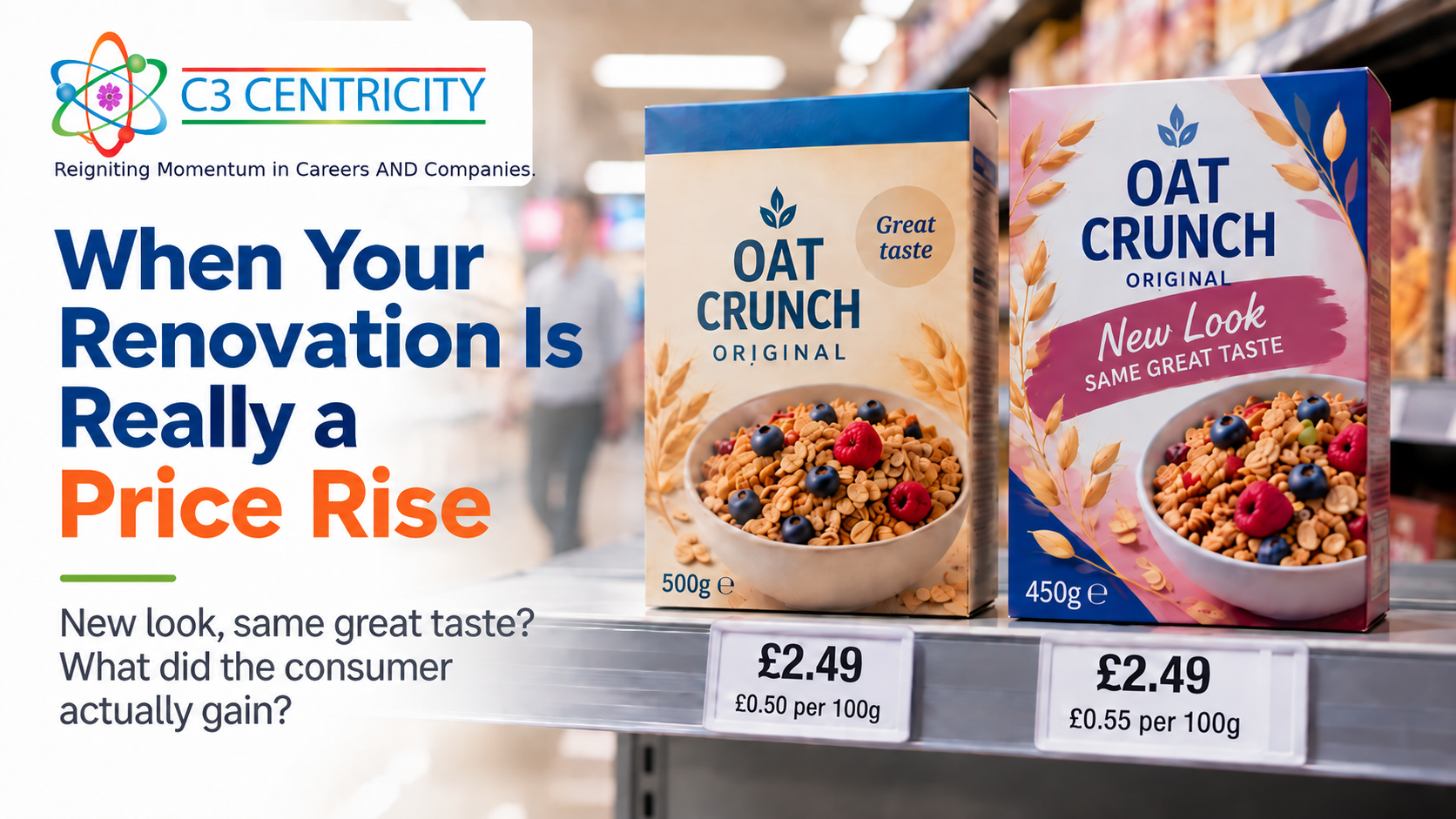
Too many CPG companies run product renovation strategies that start with cost savings. Procurement removes material, a pack gets lighter or a portion shrinks; then the change is relaunched as “new” and priced higher. Consumers are noticing. In 2025, Verbraucherzentrale Hamburg added 77 products to its list of hidden price increases, with an average rise of 28.4%, and almost 35,000 people voted on the worst offender.
The risk is higher in 2026 for two reasons. Deloitte classes 47% of consumers globally as “value seekers” who compare carefully before they buy. France and Austria now require retailers to flag shrunken products on the shelf, so shoppers increasingly compare before buying.
Short-term sales often hold while trust quietly falls, which is why so many companies miss the damage. The remedy is one extra approval in your product renovation strategy: someone has to sign off consumer value, with the old and new products side by side and both prices visible. This article shows how the four QC2™ lenses (company, customer understanding, brands and processes) can test a renovation before shoppers do.
Early in 2025, Milka’s Alpenmilch bar got thinner. It dropped from 100g to 90g, while its shelf price went from €1.49 to €1.99. That’s a hidden price rise of over 48%, on one of Europe’s best-known chocolate bars.
Shoppers noticed. When the consumer advice centre in Hamburg asked the public to vote for its “Mogelpackung des Jahres” (roughly, the most deceptive pack of the year), Milka took two-thirds of the vote. Some 34,731 people took part, the highest turnout in six years, over a ten-gram change to a chocolate bar. To add insult to injury, the new weight was often hidden behind the outer display carton on shelf.
Shrinkflation is nothing new. What caught my attention was the company Milka kept on that shortlist. Several of those products didn’t shrink quietly; they were relaunched, promoted and priced as something new.
Prefer to listen?

The renovation premium
Anyone who’s worked in CPG marketing knows the renovation calendar. I worked to one for decades, at Nestlé, Gillette and Philip Morris. A brand gets a new pack, a tweaked recipe or a fresh claim, and with it, a new price. Few people question the price, because “new” has always justified “more”. For many companies, that assumption sits quietly at the heart of their product renovation strategy.
Sometimes that’s fair. A genuinely better product can cost more to make, and consumers will often pay for real improvement.
Trouble starts when the renovation begins life as a cost saving. A lighter bottle. A thinner film. An outer carton quietly removed. A slightly smaller portion. Each change lowers the cost per unit; then marketing wraps it in a “new look”, and the price goes up anyway. What started as an efficiency project in procurement reaches the shelf as a premium.
Packaging is a particularly tempting place to do this, since a “greener” pack sounds like a gift to the consumer. Be careful with the maths, though. Switching from plastic to paper often costs more; one 2026 industry estimate puts paper-based materials at 10–20% more per kilogram than commodity plastic films. Removing material is different. Take away a carton or a layer of shrink film and the saving is real, and so is the temptation to charge more for the “new” pack.
None of this is new. Back in 2012, Consumer Reports readers flagged a coffee sold under a “New! Flavor Lock Pack” banner; the new pack used less plastic, and the story ran in a feature on packaging “gotchas”. Fourteen years on, the language on pack has changed. The playbook hasn’t.
Companies have used this cover for years. Shrinkage is often explained away by the health benefits of smaller portions or the environmental benefits of less packaging. Both can be true. They’re also very convenient.
What the watchdogs found
Look at the rest of the Hamburg shortlist.
Dr. Oetker’s cheese-crumble baking mix is the case every renovation team should study. The old pack held 730g and cost €3.99. Its replacement held 370g and cost €3.79, so the shelf price actually fell. Per kilo, though, shoppers were paying almost twice as much. The smaller pack came back as a new product under the line “Klassiker neu interpretiert” (“a classic reinterpreted”), although the consumer group says the recipe was virtually unchanged.
Here’s the detail I find most telling. On other products, such as its muesli and pudding mixes, Dr. Oetker had printed a clear notice: “Weniger Inhalt. Unveränderte Qualität.” (“Less content. Unchanged quality.”). The company knew exactly how to be honest about a smaller pack. On this one, they presented the reduction as innovation instead.
Knorr’s Penne Pomodoro Mozzarella advertised more content on pack. The price rose faster still, an increase of 29%.
Kölln’s XXL chocolate oat muesli had a lower shelf price, yet worked out almost 30% dearer. The consumer group was especially critical because Kölln had flagged quantity cuts on other products, but not on this one.
None of these is an isolated case. The Hamburg centre added 77 products to its list of hidden price increases in 2025, the second-highest number since it began counting. The average hidden increase was 28.4%.
Most of my examples come from Germany, simply because German consumer groups track these changes publicly and name the brands. I’d be surprised if the practice stopped at the border.
Why it works, until it doesn’t
Here’s the uncomfortable part. In the short term, it often pays.
Research on shrinkflation suggests consumers are deterred more by price rises than by smaller packs, and some would rather get less at the old price. Even after the Milka backlash, reports suggest Mondelez still managed to grow sales.
Yet the damage often shows up later, and somewhere else. A Canadian shopper told CBC she only discovered her Dawn dish soap had shrunk by 10% because an older bottle happened to be sitting in her cupboard. She kept buying it. She also said she now felt less loyal and was watching for alternatives. No sales report would have flagged her. She’s still in the volume figures; her loyalty just isn’t.
The same reports point to something else: YouGov polling showed a clear loss of image for the brand. So the P&L says the decision was right, while trust says the opposite. Most companies measure the first every month. Very few track the second with anything like the same discipline, and a product renovation strategy judged on margin alone will keep repeating the mistake.
That gap matters more in 2026 than it did five years ago. Deloitte’s latest consumer products outlook found that almost half of consumers surveyed globally (47%) are now “value seekers”, including 35% of high-income households. These shoppers make cost-conscious choices, chase deals and compare. They’re exactly the people who notice when a bar feels thinner.
The customer sees what your P&L doesn’t
Deloitte’s research highlights a telling pattern. Brands that deliver more value than expected, at any price point, win higher purchase intent and household share. Only about a third of brands manage it. Two habits set them apart. They avoid squeezing price for maximum margin, aiming instead to leave consumers with a sense of surplus value. And they judge their investments by the value consumers actually perceive; if consumers don’t see it, the money moves elsewhere.
Now hold a cost-saving renovation up to that test. The company saves money. The brand raises its price. The consumer receives the same, or less, and is told it’s new. By Deloitte’s own yardstick, value has gone backwards.
I don’t believe most teams set out to mislead anyone. Procurement finds a saving, which is its job. Packaging development delivers it. Marketing is asked to make the change look positive, and revenue management spots an opportunity. Every function acts sensibly within its own walls, and the customer pays for the combined result.
Marketing often gets the hardest job of all. It didn’t choose the change, yet it’s asked to make it look like progress, to retailers and to shoppers. In effect, it’s being asked to decorate somebody else’s saving.
That kind of disconnect is precisely what QC2™ was built to find.
Hidden price rises are getting harder to hide
Some European governments have decided not to wait for companies to volunteer.
France moved first. Since 1 July 2024, supermarkets larger than 400 square metres must tell shoppers when a product shrinks and its unit price rises. The notice stays up for two months, in lettering as large as the unit price, with wording along the lines of “the quantity sold has gone from 500g to 450g and the price per kilo has risen by 2%”.
Austria followed this year. Its Anti-Mogelpackungs-Gesetz (literally, the anti-deceptive-pack law) cleared Parliament in March and came into force in April 2026. Supermarkets and drugstores must now label shrunken products for 60 days; smaller retailers, and changes that raise the unit price by less than 3%, are exempt. Retailers who don’t comply face fines.
Germany has no equivalent yet. Verbraucherzentrale Hamburg says the country still lags behind on shrinkflation protection, and it’s pushing for change.
Both laws place the duty on the retailer. That means the shelf notice next to your product is written by someone else, in their words, at a moment you don’t control. I’d much rather explain a change myself than have a yellow sticker do it for me.
Any product renovation strategy aimed at European shelves should now assume the old and new packs will be compared, in public.
Two relaunches, one saving
Picture two brands in the same category (an illustration; both brands are invented). Both remove the cardboard sleeve from a multipack and save roughly the same amount per unit.
Brand A prints “New eco pack” across the front and adds 8% to the price. Its sales hold for two quarters. Then a consumer posts a side-by-side photo, a watchdog picks it up, and the brand spends the next year answering questions about greenwashing.
Brand B keeps its price, adds a small flash saying “Less packaging, same price”, and tells retailers exactly what changed. Its margin improves a little less. Its story is one it can repeat in every sustainability report and every buyer meeting, for years.
Both teams made the same operational decision. Only one of them asked what the consumer would think of it. That question belongs at the centre of every product renovation strategy.
Four QC2™ questions for your product renovation strategy
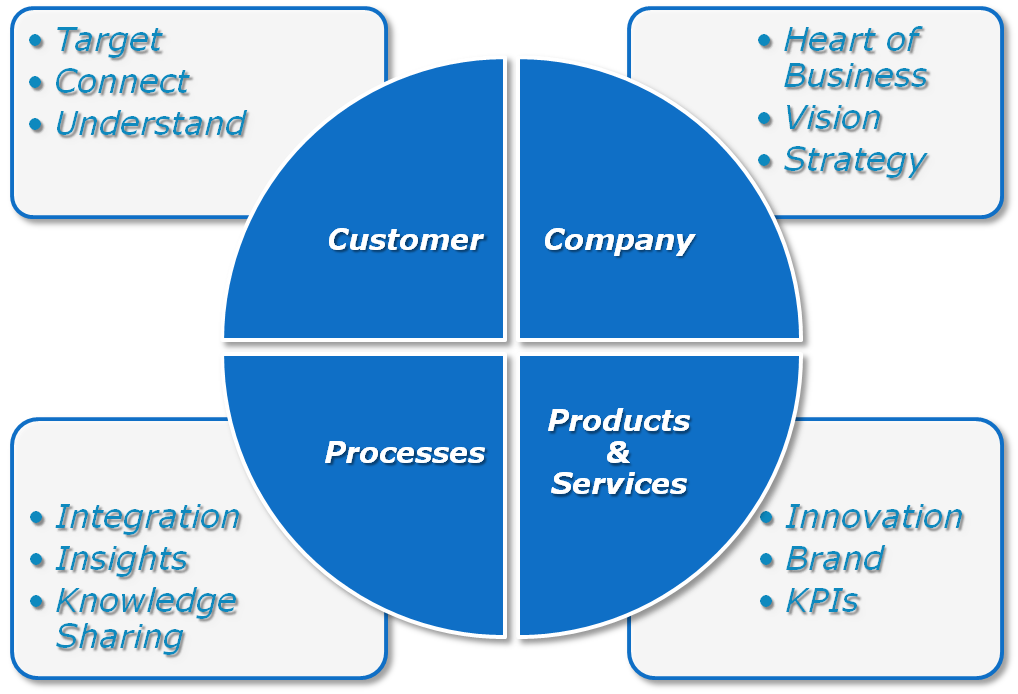
QC2™, or Quantum Customer Centricity, looks at how well four areas of a business connect: your company, your customer understanding, your brands and your processes. Here’s how each one applies to a renovation.
Your company. Why is this change happening? Be honest. If the first slide of the business case shows cost per unit, that’s the real driver, whatever the pack says. Saving money is perfectly legitimate; the question is who gets the benefit.
Your customer understanding. Would your consumers call this an improvement if you showed them both packs side by side, with both prices? Test that directly. A concept test on the new design alone won’t tell you, because people rate what they’re shown.
Your brands. What does the brand promise, and does this change keep that promise? A brand built on generosity, such as a family-size pack or a sharing format, has far more to lose from shrinkage than one that sells a small indulgent treat.
Your processes. Who in your renovation process is responsible for asking whether consumers will see the change as fair? In many companies, nobody is. Finance signs off the margin and legal signs off the claims. Nobody signs off the value.
If you can’t answer all four comfortably, your renovation isn’t ready for the shelf.
What an honest renovation looks like
You have better options than hoping nobody notices.
Share the saving. If lighter packaging cuts your costs and you hold the price, say so. “Less plastic, same price” is a claim value seekers can believe, and it’s true.
Explain the rise. Costs do go up. US producer prices for paperboard were 5.1% higher in August than a year earlier, and freight has been climbing too. I’d argue most consumers will forgive an honest price increase far sooner than a hidden one they discover for themselves.
Flag the change on pack. If the quantity drops, say so where shoppers will see it, before a shelf notice says it for you.
Keep the old pack in the room. Put the previous and new versions side by side, with their prices, in every renovation review. It’s a small ritual. It keeps the consumer’s view present at the moment decisions get made.
Test your next renovation with QC2™
Renovations are one of the clearest tests of customer centricity, because company economics, consumer value, brand equity and internal process all meet on a single shelf. If your product renovation strategy includes a relaunch, packaging change or price move in the next few months, now’s the time to check it.
The QC2™ Evaluator shows how well your company, customer understanding, brands and processes really connect, and where the gaps are. Finding them in a diagnostic costs far less than finding them in a watchdog’s shortlist or a shopper’s side-by-side photo.
Take the QC2™ Business Assessment:

Prefer to talk it through first? Book a call with me, and we’ll look at your renovation together. https://c3centricity.com/contact/
And if you’ve seen a renovation that got this right (or badly wrong), I’d love to hear about it in the comments.