Executive Summary
Supply chain volatility used to be treated as a back-office issue. That’s no longer enough!
When consumers can’t find the product they expect, when pack sizes change without explanation, or when retailers lose confidence in service levels, the problem becomes visible. And once it becomes visible, it becomes a brand trust issue.
KPMG says tariffs, protectionism and trade disruption are likely to keep recurring in 2026 and beyond, with new duties able to change landed costs overnight.
Deloitte reports that 69% of surveyed consumer products executives are shortening supply chains to reduce risk.
NIQ’s 2026 Consumer Outlook shows that 95% of consumers say trusting the brand they buy from is important.
Mid-level CPG managers may not own sourcing, factories or logistics. But they often own the promise that shoppers and retailers experience. That makes availability a commercial, brand and career issue.
If you prefer to listen:

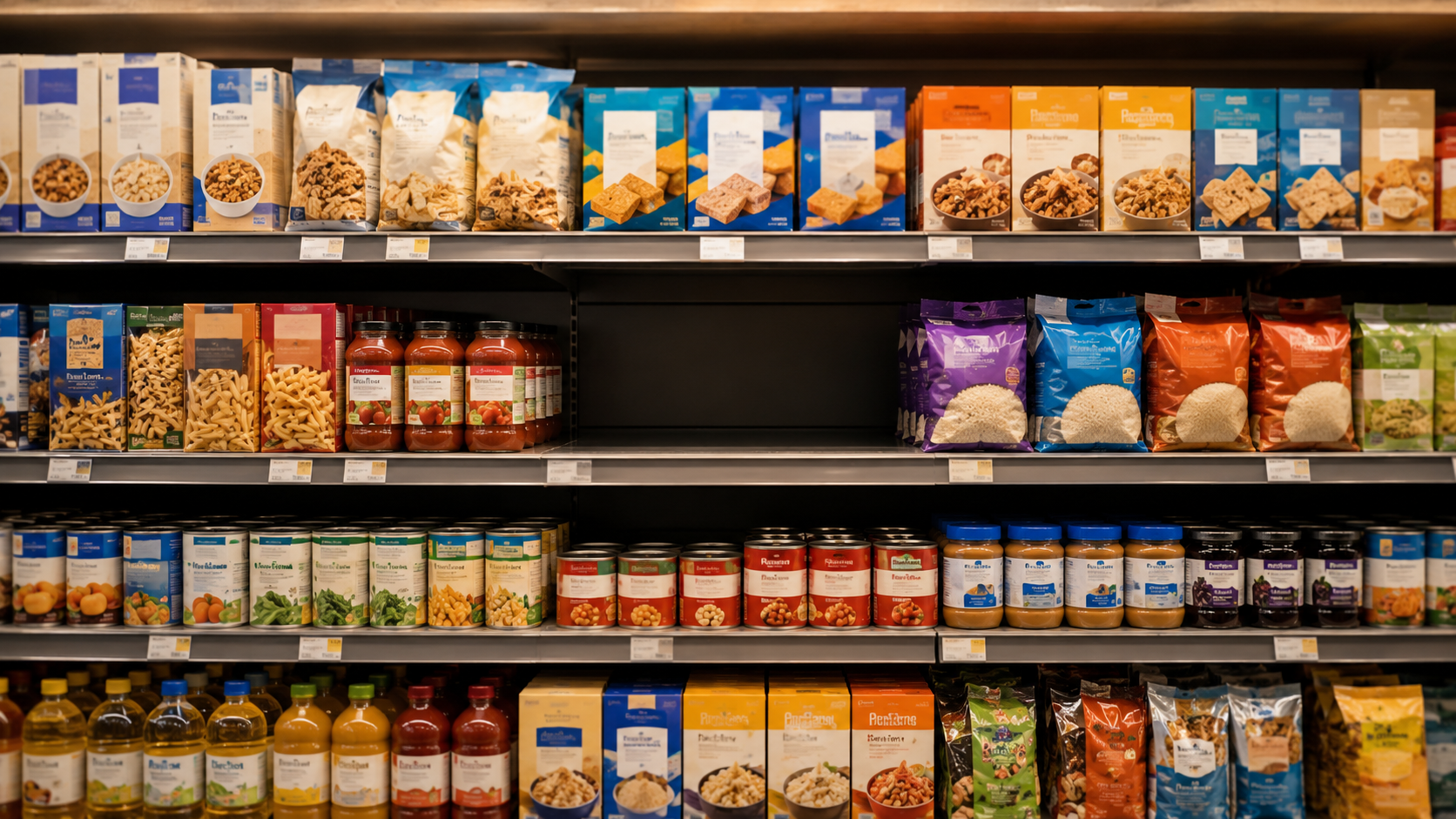
A consumer doesn’t see your supply chain problem. They see an empty space on the shelf where their product should be, or maybe a substitute they didn’t ask for, or a retailer sign or website saying “currently unavailable.”
Then they make a judgement.
Not about your procurement challenge. Not about your freight issue. Not even about the tariff impact your team has been debating for six weeks.
They make a judgement about your brand!
That judgement may be unfair. It may ignore all the operational pressure you’re facing that is sitting behind the problem. But it’s still the judgement that matters commercially.
For years, CPG companies treated supply chain resilience as an operations topic. That made sense when disruptions were occasional and mostly invisible to consumers.
But today, volatility has moved closer to the shopper. It affects availability, price, pack, claims, launch timing, retailer confidence and service response.
That changes the role of mid-level managers.
Marketing doesn’t own the factory. Sales doesn’t own the shipping route. Insights don’t own supplier risk. Innovation doesn’t own raw-material planning. Yet all these teams often own the explanations, expectations and decisions that determine whether disruption becomes a temporary irritation or a lasting trust gap among consumers.
Make no mistake, the availability promise is now an integral part of the brand promise.
Why availability now carries more emotional weight
Availability used to feel basic. The product was either there or it wasn’t.
Today it’s more emotionally loaded because shoppers are already under pressure, managing higher prices, tighter budgets, more choices, more health concerns and more information. They’re also making more deliberate decisions about what deserves a place in their basket.
NIQ’s Consumer Outlook Guide to 2026 says consumers have become cautious, with every purchase needing to earn its place. NIQ also reports that 95% of consumers say trusting the brand they are buying from is very or somewhat important, while functional quality and consistency are key trust drivers.
That last word matters: consistency.
A brand that is usually there feels dependable. A brand that disappears without explanation feels fragile. A brand that changes size, quality or availability without preparing the consumer, feels as though it has broken an unwritten agreement. This is why out-of-stocks do more damage than the single missed sale. They create a moment of forced reconsideration. The consumer who came to buy your brand now has to think: do I wait, try the retailer brand, buy a smaller size, switch format, choose another store, or decide I don’t need it after all?
For CPG managers, this makes availability part of consumer behaviour, not just supply planning.
The operational issue becomes a consumer story
Supply disruption is rarely simple.
A product may be unavailable for many different reasons: supplier fragility, raw material cost, freight delays, production changes, retailer ordering behaviour, forecasting errors, promotional spikes, or packaging constraints, tariff exposure or internal prioritisation.
Consumers rarely see that complexity.
Retailers may see more of it, but they still judge the commercial effect rather than the impact on consumers.
Did the brand protect shelf presence? Did it warn early? Did it offer a credible alternative? Did it help the buyer manage the category impact? Did it arrive with a plan?
KPMG’s 2026 supply chain outlook says ongoing tariffs, non-tariff protectionism and trade disruption are likely to keep recurring, with new duties able to change landed costs overnight and force teams to reconsider sourcing, shipping routes and customer prices.
Deloitte’s 2026 Consumer Products Industry Global Outlook adds that 69% of surveyed consumer products executives said they are shortening supply chains to reduce risk.
These are major strategic moves.
Yet the consumer-facing effect may look mundane: fewer variants, a changed pack, a gap on shelf, a postponed promotion, a smaller assortment or a price increase. The gap between internal complexity and external simplicity is where trust can break.
A mid-level brand manager may not be able to fix the landed cost, but they can ask whether the consumer story has been prepared.
A sales manager may not be able to change the production plan, but they can ask whether the retailer has been given a credible category answer.
An insights manager may not be able to prevent the disruption, but they can show which consumers are most likely to switch and which messages reduce frustration rather than adding noise.
An innovation manager may not be able to prevent a delayed launch, but they can help the organisation decide whether it is better to launch late with confidence or launch weakly into inconsistent availability.
Availability is no longer just “Can we make it?” It is also “Can we protect trust while we manage the constraint?”
Why silence makes disruption worse
Many CPG teams communicate late because they are waiting for certainty.
That instinct is understandable. Nobody wants to tell a retailer or consumer something that later changes. Nobody wants to create concern when the supply chain team is still working through options. The problem with that is that silence creates its own story.
When a product disappears, consumers do not wait for an official explanation before forming an opinion. They search, compare, buy something else and tell others.
Retailers do the same, but with more commercial pressure attached. Silence can suggest disorganisation, even when the team is working hard. It can suggest poor planning, even when the cause is entirely external. Most damagingly, it can suggest the brand does not understand the consumer’s frustration.
Consumers are not asking for a lecture on logistics. They are asking whether the brand still respects their time, money and choice.
A useful availability message does not need to reveal every supply detail. It needs to answer the consumer’s practical concern: when will it be back, has the product changed, is the alternative comparable, and why is the price different?
Marketing, sales, consumer care and e-commerce teams need these answers before disruption becomes public.
Too often they receive them after the retailer has already escalated, after consumer complaints are already visible, or after sales has already lost the shelf argument. That is not a communication problem. It is a readiness problem.
The role of CATSIGHT™ in availability trust
CATSIGHT™ is useful in these situations, because it brings the discussion back to what consumers and retailers actually need to believe.
1. Start with the category and brand definition. Because a missing shampoo, baby food, pet food, medicine-adjacent product or premium treat, does not create the same level of frustration. The higher the routine, risk or emotional connection, the higher the availability expectation.
2. Define the consumer aim. A shopper looking for a trusted baby product wants reassurance. A pet owner looking for a specific food may worry about digestion or their pet’s acceptance of the replacement. A premium beauty buyer wants consistency and confidence. The aim is not simply “buy the product.” It is often “feel safe, prepared, in control or respected.”
3. Identify the target consumers most at risk. Heavy buyers, routine shoppers, health-focused consumers, parents, pet owners and loyalty members may react very differently to availability gaps. Some will wait. Some will switch instantly. Some will never return.
4. Build support from the team. Supply chain, sales, marketing, finance, regulatory, procurement, customer service and e-commerce need one shared understanding of the situation, not one giant statement, but one version of the truth.
5. Get intimate with the consumer experience. Look at search behaviour, retailer reviews, call-centre transcripts, social comments and substitution patterns. Don’t only ask “How many units did we lose?” Also ask “What did consumers think had happened?”
6. Find the human truth. Availability is not only about presence. It is about dependability. Consumers forgive some disruption when they feel respected. They are far less forgiving when they feel misled, ignored or forced into a worse choice without explanation.
7. Take action before the next disruption, not during it. Build availability communication templates for priority products, decide who speaks and what can be said, and make sure sales teams have a retailer-ready story before they need it.
If you would like a FREE HD Infographic of the detailed CATSIGHT™ process, please let us know, we’d be happy to send it to you.

What mid-level managers can do now
Start with a simple availability risk review.
Which products would create the biggest consumer frustration if unavailable for four weeks? Which have no acceptable substitute? Which are most exposed to tariff, supplier or production constraints? Which retailer relationships would be most damaged by inconsistent service? Which product pages, FAQs, sales decks and consumer service scripts would fail if availability changed tomorrow?
This review doesn’t require ownership of supply chain. It requires ownership of the consumer and retailer consequence.
The next step is to build an availability story for priority risks.
That story should cover what’s happening, what the consumer or retailer can do, what alternatives exist, what’s not changing, and when a clearer update can be expected. The wording should be simple, factual and direct. Avoid hiding behind corporate phrases. Avoid overpromising. Avoid making the brand sound helpless by defaulting to global conditions as an explanation.
A strong consumer message might read: “Supply for this product is temporarily constrained while we work to meet higher-than-expected demand. The formula is unchanged. If your usual size is not currently available, the 500ml format contains the same product and remains in stock. We expect full availability to be restored by [date].”
That does not solve the supply issue, but it does reduce confusion and signal respect.
For retailers, the message needs more commercial depth: Expected duration, which SKUs are protected, what stores should substitute, what shopper behaviour to anticipate, and what support the brand will provide. Sales teams need that answer before the buyer asks.
Why this is also a career issue
Availability pressure reveals managers who can work beyond their function.
The brand manager who understands supply constraints without losing consumer empathy becomes more valuable. The sales manager who can explain disruption without damaging retailer trust becomes more credible. The insights manager who can translate availability data into switching risk becomes harder to ignore. The innovation manager who adjusts launch ambition to match operational reality protects both the brand and the business.
This is where company momentum and career momentum meet. CPG businesses need managers who can turn volatility into clearer decisions, not by pretending disruption is positive, but by making the organisation more honest, faster and more consumer-aware when it appears.
Conclusions
Supply chain volatility is not going away. KPMG expects tariffs, protectionism and trade disruption to keep recurring in 2026. Deloitte reports that many consumer products companies are already shortening supply chains to reduce risk. Those actions matter, but they are not enough if consumers and retailers experience disruption as silence, confusion or broken promises.
The strongest CPG brands will not be the ones that avoid every availability issue. That’s unrealistic.
They’ll be the ones that understand which availability gaps carry the greatest trust risk, prepare the consumer and retailer story early, and make cross-functional decisions before the market writes the story for them.
Mid-level managers didn’t create today’s volatility. But they’ll manage many of the moments where it becomes visible. And when availability becomes visible, it becomes part of the brand.
The brands that win the next phase of CPG growth will be the ones that protect trust when availability comes under pressure. If supply volatility, retailer service challenges or shopper frustration are slowing momentum in your category, C3Centricity can help you identify where the promise is breaking down and how to rebuild confidence from the consumer up.
Reach out to explore where to start.