
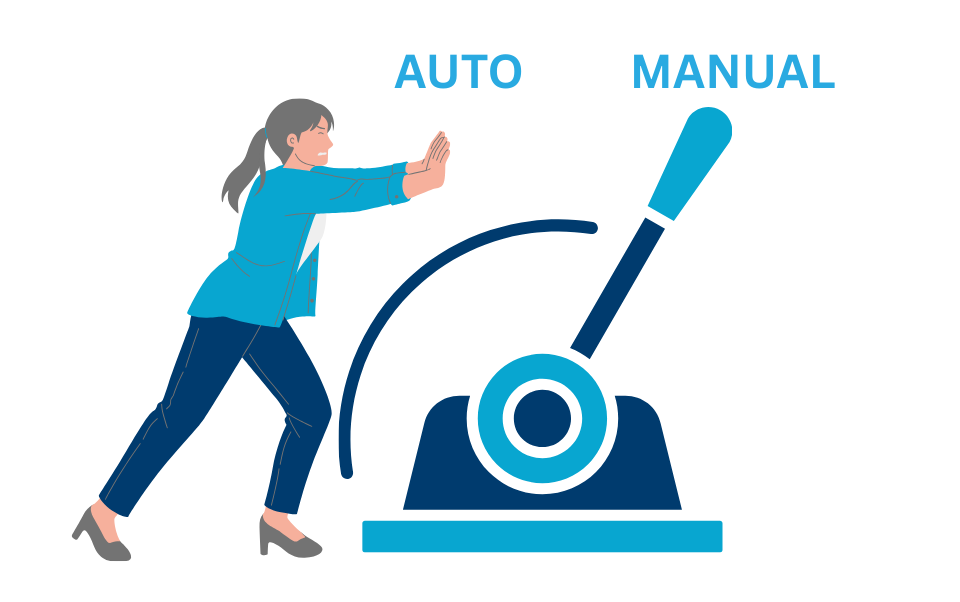
Why CPG brands will win by giving people control (and why the mid-managers who lead this will rise fast)
Executive summary
Consumer behaviour is swinging in a direction many brand teams did not plan for. Algorithms made discovery easier, but they also created fatigue, sameness, and a growing suspicion that the “help” is really a nudge.
Mintel’s 2026 global consumer predictions capture the shift: more people will look for experiences that let them understand, edit, and even co-create the algorithms shaping their lives. (Edelman)
Europe is already showing the conditions that feed this mood. A February 2026 EuroBarometer reports very high concern about disinformation, hate speech, and misleading content created by AI. (euronews) When trust feels fragile, people tighten control.
The opportunity for CPG is simple and powerful: stop trying to win by being “more personalised” and start winning by being more respectful.
Brands that design clear, consumer-friendly control moments will earn preference, repeat purchase, and advocacy in a world where “creepy” travels faster than any campaign.
This article is a practical guide to the Anti-Algorithm consumer, written for mid-level leaders who want to reignite momentum in their companies and in their careers. The aim is not another trend summary. The aim is a blueprint you can run.
If you prefer to listen rather than read check out the C3Centricity Podcasts on your usual channel.

Algorithms gave us speed. Consumers are paying the attention bill.
Digital culture has reached a point where people feel surrounded by content that is not meant to help them, but to keep them scrolling.
A recent European trend commentary reports 71% of people say there is too much digital content and 46% feel overwhelmed, making it harder to find content they trust. (house-of-communication.com)
Those numbers matter because trust is the invisible ingredient in preference. Once trust drops, consumers become more conservative, more suspicious of claims, and more likely to switch without telling you why.
Brand teams sometimes treat “algorithm fatigue” as a social media problem. That is too narrow.
Algorithms shape what people see, what they believe is normal, what they think others choose, and even what they assume is “best.”
That influence spills into CPG because everyday products sit in intimate moments, and intimate moments do not tolerate manipulation. A nudge that feels harmless in entertainment can feel invasive in food, baby care, personal care, and health categories.
Policy signals across Europe add weight to the mood. The Digital Services Act pushes platforms toward more transparency around recommender systems and gives users options to modify the parameters behind recommendations. (WIRED)
Whether a CPG brand loves regulation or hates it, the direction is clear: consumers are being trained to expect more control, and regulators are reinforcing that expectation.
A clean way to spot whether an initiative fits this new environment is to ask one question early, before teams get attached to the idea.
“Will the experience make the consumer feel more in control, or more controlled?”
That single line prevents a lot of expensive work that later gets described as “great execution” of the wrong strategy.
Personalisation is not the enemy. Permission is the missing ingredient.
Personalisation still has a place, and Europeans say so. IAB Europe’s consumer research reports 80% prefer fewer, more relevant ads rather than generic mass advertising. (IAB Europe) That is not a rejection of relevance. That is a rejection of noise.
What has changed is the tolerance for hyper-personalisation that feels intrusive, especially when the consumer cannot see or influence the logic.
Capgemini’s consumer trends report states that 69% of consumers are worried about personal data privacy being used to create hyper-personalisation of content. (Capgemini)
That worry is not academic. It shapes behaviour in small ways that compound: lower opt-in rates, more unsubscribes, less engagement with owned channels, and more scepticism toward claims.
The same IAB Europe work also highlights an important clue many companies miss. People do not reject the value exchange when it is clearly explained.
The report estimates the average European receives €212 per month of value from ad-funded online services, and 60% consider a “pay or consent” model reasonable when they understand what they are getting and what they are giving. (IAB Europe)
The point for CPG is not that brands should charge for content. The point is that transparency and choice turn irritation into acceptance.
User behaviour supports that story.
A digital trust report from Usercentrics notes 36% of consumers globally have adjusted privacy settings on websites or apps, and the same share have stopped using a site or deleted an app due to privacy concerns. (Usercentrics)
People are not passive. They are actively pruning.
So the strategic move is not “stop personalising.” The strategic move is to treat personalisation as something that must be earned through permission and shaped through consumer control. That shift is where you create momentum, because it raises trust while competitors continue chasing incremental targeting gains.
The Anti-Algorithm consumer is asking for three things, and none of them are complicated
Mintel’s prediction uses the language of editing and co-creating algorithms. (Edelman) Put into everyday words, the Anti-Algorithm consumer wants three things that are remarkably consistent across categories and markets.
- They want to know why. “Why am I seeing this?” is the modern version of “Who told you?” When people can’t see the reason, they assume the reason is not in their interest.
- They want an easy lever. Opting out should not feel like a punishment. Changing preferences should not require detective work. Resetting should be possible without starting a legal dispute with a cookie banner.
- They want discovery that feels human rather than mechanical. Algorithms are brilliant at patterns and terrible at meaning. Humans like surprise, story, and a feeling that their choices express who they are. That hunger for identity is exactly why many brands feel “samey” right now. Platform incentives reward what already performs. That pushes everyone toward similar claims, similar visuals, similar hooks, similar messages. Consumers notice, then stop caring.
This is a gift for mid-sized CPG brands because mid-sized brands can still be specific. They can still take creative risks. They can still feel like people rather than machines. Building consumer control moments is one of the fastest ways to signal, “We are on your side.”
Case study: Lush chose people over the feed
Lush made a bold and very visible statement when it announced it would step away from major social platforms across 48 countries, arguing it would not be present until platforms take stronger action to create a safer online environment. (Edelman)
No suggestion here that every brand should follow. Different categories, different margins, different reliance on discovery channels, different retailer dynamics.
The value of the example is the cultural signal it sent. Lush didn’t just complain that algorithms were changing. Lush turned away from the constant optimisation mindset and anchored the choice in wellbeing and safety, two ideas that fit its brand.
That move matters in an Anti-Algorithm era because consumers are hungry for restraint. Everyone is shouting. A brand that chooses clarity over constant visibility feels calmer, and calm is increasingly associated with trust.
The practical translation for CPG is not “leave social.” The practical translation is to find one place where the brand can show restraint and respect rather than squeezing for one more click. Sometimes that restraint is frequency. Sometimes it is the decision to stop retargeting someone who has already bought. Sometimes it is the choice to remove a dark pattern and accept slightly lower short-term conversion in exchange for higher long-term preference.
Trust becomes a growth input again when consumers feel their attention is treated as theirs.
What consumer control moments look like in real CPG work
Consumer control moments are not grand brand platforms. They are small design choices that quietly tell the consumer, “You steer.”
A useful way to see the possibilities is to look at how big consumer companies already handle communications preferences, because that is where the permission principle is most explicit.
Unilever operates a preference centre where users can manage what communications they receive and change that choice over time. (preferencecenter.unileversolutions.com)
Nestlé has a public preference centre for at least one of its regional corporate sites, built to allow people to customise communications settings. (Nestlé CWA)
Danone also uses communication preference management in certain markets. (OneSignal)
Those pages are not the point. The point is what they represent: control is being normalised. The brands that make control easy, friendly, and non-punitive are the ones that look modern and respectful.
Now shift the idea from “email preferences” to the broader consumer experience.
Control can show up in many ways:
- As the ability to choose how often you hear from the brand, rather than being forced into a default high frequency.
- As a clear explanation of why a recommendation appears, rather than a mysterious “for you.”
- As a “reset my preferences” button that doesn’t require a call centre.
- As more contextual relevance and less behavioural stalking, especially because consumer frustration rises when ads follow them for products already purchased. (IAB Europe)
Control also matters for credibility.
That February 2026 Eurobarometer’s high concern about misleading AI content tells you consumers are primed to question what they see. (euronews) So verification becomes a control moment too.
Clear sources. Clear language. Clear claims. Fewer exaggerated promises. Faster proof.
A beautiful side effect appears when brands build these moments: internal decision making becomes easier.
Teams stop arguing about “more personalisation” as a default goal and start discussing which moments deserve relevance and which moments deserve simplicity. That conversation is where momentum returns, because the work stops being abstract and starts being measurable.
Turning Anti-Algorithm into a repeatable method using C3Centricity’s CATSIGHTTM Process
Most trend topics die because they never become a working habit inside the organisation. The CATSIGHTTM process prevents that because it forces a clean line from objective to human truth to action.
Category and brand definition matters first because not every category earns the same permission. Products tied to wellbeing, family, and personal identity require a different standard of restraint than products tied to fun and experimentation. A single “personalisation strategy” across a portfolio is how brands accidentally become intrusive.
The consumer’s aim in the moment comes next. Consumers are rarely aiming for “a personalised experience.” They are aiming for relief. They want to avoid waste, avoid judgement, feel competent, feel safe, feel proud, feel calm. That aim is the anchor. Without it, the brand builds mechanisms and calls them strategy.
Intimacy then becomes non-negotiable, because the Anti-Algorithm mood is emotional and language-based. Eurobarometer tells you the emotional weather across Europe, yet it does not tell you the words consumers use when trust drops. (euronews)
Ten short conversations across two markets will. Those words become your early warning system. They tell you whether a control moment is working or whether it still feels like a trick.
A human truth emerges when those conversations are taken seriously. A common tension sits right at the centre of this trend: “I want help, not pressure.” That tension becomes the design brief. Build assistance that feels like a choice.
Action then becomes very concrete. A control moment that never ships is a mood board. A control moment that ships can be measured. Opt-in quality rises. Complaints fall. Repeat purchase rises. Service recovery becomes faster. Owned channel performance becomes less volatile.
Support from a team matters because control moments cross lines that organisations love to separate. Marketing, legal, IT, insights, ecommerce, and commercial teams all have a stake. A shared method prevents the endless loop where everyone agrees the idea is right and nobody owns the decision.
Learn more about the CATSIGHTTM Process and Training

QC2 makes it stick because control is a system, not a campaign
QC2TM, another of C3Centricity’s proprietary processes, is useful here because the Anti-Algorithm consumer exposes a structural weakness inside many companies.
Brands often treat trust as a message, while consumers experience trust as a system. Data practices, frequency, targeting, claims, service design, and transparency all add up to one feeling. That feeling drives preference.
A practical rhythm that works well for mid-sized CPG companies is to treat consumer control like product development rather than communications.
Pick one control moment, run it as a small cross-functional build, ship within a defined window, measure one consumer metric and one commercial metric, then make it repeatable across brands and markets where it fits.
This approach avoids the “big transformation” trap and creates visible progress, which is how organisations regain confidence.
That confidence is momentum. That confidence also becomes career momentum for the mid-level leader who can orchestrate it.
Learn more about QC2

Why this becomes a career-maker topic for mid-managers
Anti-Algorithm is a rare kind of opportunity because it sits at the intersection of consumer behaviour, regulation, trust, and growth. Few leaders feel fully comfortable across those areas, yet organisations desperately need someone who can translate them into decisions.
European consumers say they prefer fewer, more relevant ads, yet they are also frustrated by privacy complexity and the experience of trying to exercise choice. (IAB Europe)
Consumers worry about hyper-personalisation driven by personal data use. (Capgemini)
People are actively changing privacy settings and abandoning sites when they feel uneasy. (Usercentrics)
Those are not abstract trends. They are signals of a new power dynamic.
Mid-level leaders who can build consumer control moments become valuable for a simple reason: they reduce risk while lifting trust, and they do it through tangible work that ships. Senior leaders remember the person who turned a messy cultural shift into a clear operating model.
That’s what reigniting momentum looks like in a company. That’s also what it looks like in a career.
Closing
The Anti-Algorithm consumer is not rejecting technology. They are drawing a boundary around autonomy and identity.
Brands that win will not be the loudest, nor the most aggressively personalised.
Brands that win will feel like allies. They will help people choose, help people verify, help people reset, and help people feel seen without feeling watched.
That shift reignites momentum in companies because trust becomes a growth input again.
That shift reignites momentum in careers because the people who can build trust systems become the people who get listened to.
What’s Next?
A practical next step is to identify where your brand experience currently makes consumers feel guided versus herded. The QC2TM Evaluator (our free quiz) is a useful diagnostic for that, because it forces clarity across the company, consumer, brand, and process elements that shape trust.